STOP OVERFLOWS, LEAKS, AND FOUNDATION RISK WITH A PROPERLY SIZED SEAMLESS GUTTER SYSTEM
SEAMLESS GUTTER INSTALLATION BUILT FOR REAL RAIN
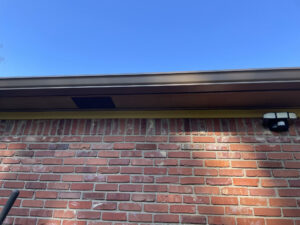
If your gutters overflow during heavy storms, pull away from the fascia, or leave water pooling near the foundation, it’s usually a sign the system is either damaged, improperly sloped, or undersized for your roofline. A correctly installed gutter system is more than a finishing detail—it helps move roof runoff away from the building, reducing the chance of moisture problems around the structure and landscaping. Learn more…
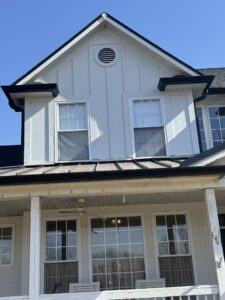
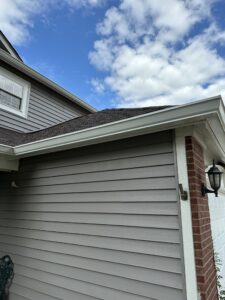
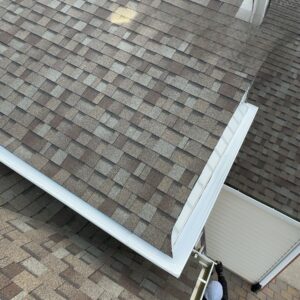
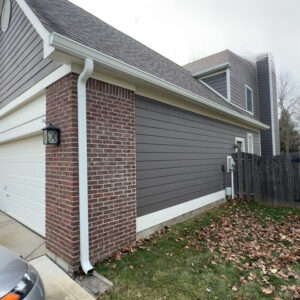
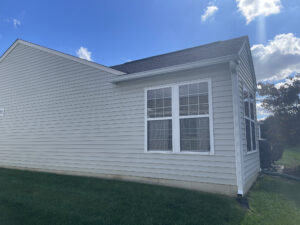
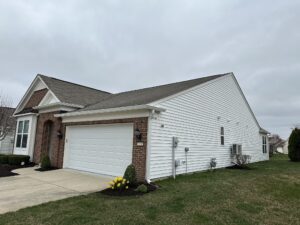
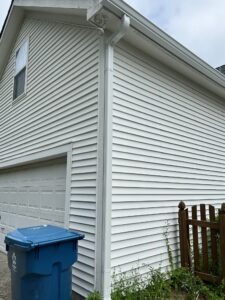
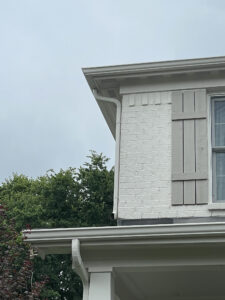
Our team specializes in seamless gutter installation designed around your roof geometry and drainage needs. Seamless gutters are formed in longer continuous runs with fewer joints, which can reduce common leak points and create a cleaner finished look along the eaves. For many properties, that means less drip-line staining, fewer seam-related repairs, and a system that performs more consistently across long runs.
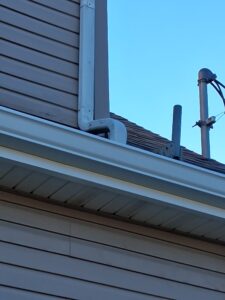
During your onsite evaluation, we measure roof edges, identify ideal downspout locations, and check for drainage issues that can amplify water problems—like short downspouts that dump water too close to the home. Building-science resources commonly recommend terminating downspouts at least 5 feet away from the foundation (or routing to a proper drainage solution) to help reduce soil saturation near the structure. We’ll walk you through options such as downspout extensions, splash blocks, or routing to approved drainage areas based on your property layout.
We also help you choose the right size system. Many homes use 5-inch gutters, while 6-inch gutters are often selected for higher-capacity needs such as steep roofs, long rooflines, or areas with intense rainfall. Rather than guessing, we’ll recommend sizing that matches your roof runoff risk and prevents the “waterfall effect” that can occur when gutters can’t keep up.
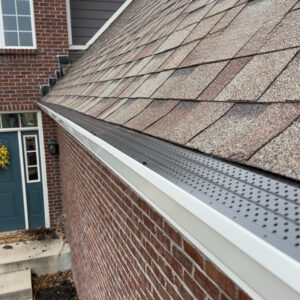
To reduce clogging from leaves and roof grit, we offer gutter guard options and will recommend the right style based on your debris type—especially if you deal with pine needles or heavy leaf drop. Guards can reduce cleaning frequency, but the design matters, so we focus on matching protection level to your site conditions.
Signs You Need New Gutters
What We Install
Our Process
What Colors Customers Actually Choose *And Why*
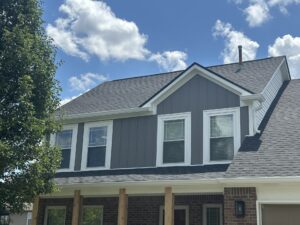
Most gutter manufacturers/distributors offer a core neutral palette (multiple whites, creams, grays, browns, bronze, black), plus occasional accent colors (greens/blues/reds). Examples of standard palettes are published in color cards by Englert and Service Partners, and expanded palettes appear in Senox distributor color sheets.
Trend-wise, design sources and homeowner marketplaces routinely highlight black and bronze/copper looks as popular modern choices, while white remains a classic default (often chosen to match trim).
CLASSIC NEUTRALS
TRIM MATCH SAFE CHOICES
30 GLOSS WHITE
HERRINGBONE
WICKER
ALMOND
MODERN HIGH CONTRAST
POPULAR FOR CONTEMPORARY EXTERIORS
BLACK
DARK BRONZE
TUXEDO GRAY
BRONZE
WARM EARTH TONES
BRICK/STONE COMPATIBILITY
CLAY
NORWEGIAN WOOD
MUSKET BROWN
ROYAL BROWN
COOL NEUTRALS
MODERN
LIGHT GRAY
DARK GRAY
PEARL GRAY
TUXEDO GRAY
ACCENT OPTIONS
PERFECT FOR ARCHITECTURAL ACCENT
BLUE
COPPER
BURGUNDY
BRITE RED
Gutter FAQ's
Do I need new gutters or can they be repaired?
If gutters are leaking at seams, pulling away, or sagging, repairs may work. If the system is undersized, heavily corroded, or repeatedly overflowing, replacement is usually more cost-effective long-term.
What's the difference between seamless gutters and sectional gutters?
Seamless gutters are formed in long continuous runs (fewer joints), which reduces common leak points and looks cleaner. Sectional gutters have more seams and connectors, which can become maintenance points over time.
What size gutters do I need; 5 inch or 6 inch?
Many homes use 5-inch gutters, but 6-inch systems can handle higher roof runoff and are often recommended for steep roofs, long runs, or heavy rain zones. A site measurement is the best way to size correctly.
How far should downspouts discharge away from the foundation?
A common building-science recommendation is to terminate downspouts at least 5 feet from the foundation (or into a proper drainage system) to reduce soil saturation and moisture risk.
Are gutter guards worth it?
Gutter guards can reduce clogging and cleaning frequency, but performance depends on debris type (leaves vs pine needles), roof geometry, and guard design. We recommend guard selection based on your trees and roof edge conditions.
How often should gutters be cleaned?
Cleaning frequency depends on nearby trees and debris load; many properties benefit from seasonal checks (especially before heavy leaf drop and after storms). Guards can reduce, but not always eliminate, maintenance.
Do gutters protect my foundation and building envelope?
Yes, directing roof runoff away from the building helps reduce soil saturation near foundations, which can contribute to moisture problems (including mold/rot risks).
Can you match gutter colors to my exterior?
Most aluminum gutter systems offer a wide color range (whites, grays, browns, bronze, black). Matching trim/fascia is common; contrasting colors (black/bronze) are also popular for modern exteriors.
Enter your information in the form and a member of our office will be in contact with you within 24 hours. Please let us know your preferred contact method so we can get your appointment scheduled at your earliest convenience.