
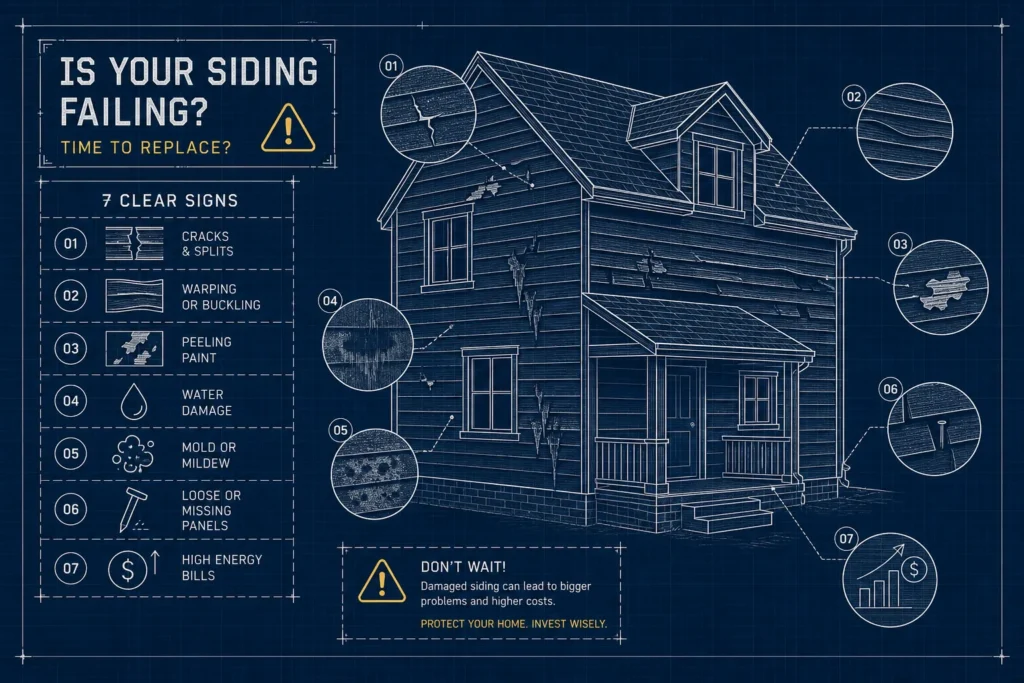
7 Clear Signs Your Home Siding Needs Replacing
Most homeowners don’t think about their siding until a neighbor mentions something, or water shows up somewhere it has no business being. By then, what could have been a manageable repair has usually turned into a much bigger conversation. Knowing when siding replacement is actually necessary doesn’t require a construction background, it requires paying attention to what your exterior is already telling you.
Some of these warning signs show up plainly from the street. Others only reveal themselves when you check interior walls or notice your utility bills creeping up without explanation. A trained eye, like what a certified installer brings to a free inspection, can confirm what you’re seeing and tell you what’s happening behind the surface. But you can get a solid read on your siding’s condition before that conversation ever happens.
1. Surface damage that's already telling you something
Visible siding damage is almost never just cosmetic. What you see on the surface is usually a symptom of something that started earlier and has been working inward. The most common signs are easy to spot from the ground.
Warping and buckling panels
Warped siding bows out from the wall, ripples along its length, or pulls away at the edges. This almost always traces back to moisture getting behind the panel or to material fatigue from repeated temperature swings. Once a panel has warped, it doesn’t recover its original shape. The gap it creates becomes an open invitation for more water, which accelerates the damage underneath.
Cracks, splits, and missing sections
Cracking is one of the most consistent siding damage indicators across every material type. Small cracks expand with freeze-thaw cycles and direct impact, and what starts as a hairline fracture becomes a reliable water entry point within a season or two. Don’t treat cracks as a cosmetic issue. They are structural openings in your home’s first line of defense against weather.
Heavy fading and chalky surfaces
Some color change over time is normal. What you’re looking for is accelerated fading, a chalky or powdery surface texture, or paint that keeps failing despite repainting. These are signs the siding’s protective finish has broken down from UV degradation or surface failure. Beyond appearance, this also signals that the material itself is losing its ability to shed water and resist the elements.
2. Moisture damage: what you see outside and what's happening inside
Moisture is the most expensive problem siding damage creates. It starts at the surface, works through the panel, and reaches the wall sheathing and insulation before most homeowners catch it. Catching it early is the difference between replacing siding and replacing the wall system behind it.
Mold, mildew, and rot on the exterior
Surface mildew can sometimes be cleaned. Structural rot cannot. Rot feels soft when you press on it, crumbles at the edges, and often shows as discoloration along panel seams, at the base of siding courses, and around window and door trim. These are the areas where moisture tends to pool and dwell. Left untreated, rot spreads into the wall sheathing and turns a siding problem into a structural repair that costs significantly more to fix.
Interior warning signs that point outside
Siding failure doesn’t stay outdoors. When moisture enters the wall cavity, it shows up inside the home in several ways:
- Peeling or bubbling paint on interior walls near exterior surfaces
- Soft or warped drywall
- Water staining along the base of walls
- Musty odors without an obvious source
The location of these symptoms matters. When they concentrate near exterior walls, window corners, or outside seams, the cause is almost always siding or flashing failure, not plumbing or household condensation.
3. Two warning signs that don't look like a siding problem at first
Neither of these looks like a siding problem at first. Most homeowners connect them to other causes entirely. After 20 years in the field, we see both of them show up regularly on homes with deteriorated siding, and both point to damage that has usually been developing for a while.
Rising energy bills without another explanation
Cracked, warped, or deteriorated siding creates air leakage paths that force your HVAC system to work harder to hold indoor temperatures. According to DOE building envelope research, poorly sealed building envelopes account for up to 25% of heating and cooling energy loss, and damaged siding is a direct contributor. When insulation gets wet from moisture intrusion, it can lose up to half its effective R-value, compounding the problem further. If your heating and cooling costs have been climbing and nothing else in the home has changed, your exterior wall assembly deserves a serious look.
Pest activity along exterior walls
Gaps, cracks, and rotted sections in siding create entry points for carpenter ants, termites, and rodents, all of which are active in the Midwest and common in Indiana residential areas. Pest activity near exterior walls is not just a pest control problem. It’s a reliable indicator of structural compromise in the siding or the material behind it. By the time you notice pest evidence inside the home, the entry point has typically been there long enough for water damage to follow.
4. How Midwest weather puts siding on a faster clock
National lifespan estimates for siding assume average conditions. Indiana doesn’t have average conditions. The combination of climate factors here accelerates wear in ways that catch homeowners off guard, especially if they’ve never owned a home in a colder, storm-active region before. Understanding siding life expectancy by material is only half the equation, local climate determines how fast you burn through it.
Freeze-thaw cycles and what they do to panel seams
Indiana winters move above and below freezing repeatedly throughout the season. Moisture trapped in siding cracks and seams freezes, expands by roughly 9%, thaws, and refreezes. Over several seasons, that mechanical stress pries seams wider, loosens fasteners, and causes delamination along panel edges. Vinyl becomes especially brittle in cold temperatures, making it more vulnerable to cracking from impact during winter months, even from minor contact.
Hail, humidity, and UV: Indiana’s triple threat
Indiana sees 200 or more hail events in an active storm year, with damaging hail common during spring and early summer. Hail chips, dents, and fractures siding surfaces in ways that aren’t always obvious from the ground but create water entry points that develop quickly. Summer humidity encourages mold growth and moisture intrusion, particularly on north-facing walls that get limited sun exposure. Prolonged UV from hot Indiana summers accelerates fading and surface breakdown, especially in darker color profiles. A siding system stressed by all three factors ages faster than its rated lifespan and needs an exterior siding inspection sooner than most homeowners expect.
5. Siding repair vs. full replacement: making the call
Not every siding problem needs a full replacement. But knowing when repair is the right call, and when it’s just delaying the inevitable, is where a lot of homeowners make costly mistakes. Choosing the wrong path can mean spending thousands on patchwork repairs that fail within a few years, only to face the full replacement cost anyway.
When spot repair is the right call
Isolated damage on a young, otherwise solid exterior is a legitimate repair candidate. A single cracked panel, a small area of mold, or one buckled section surrounded by sound material can often be addressed without replacing the whole exterior. Repair works best when the underlying sheathing is dry, the damage is localized, and the siding material hasn’t exceeded its expected lifespan. For reference on siding life expectancy by material: vinyl typically lasts 20 to 40 years, fiber cement 30 to 50 years, wood 20 to 40 years with consistent maintenance, and metal 40 to 70 years.
The cost tipping point for full replacement
The industry rule of thumb is straightforward: when repair costs approach 30 to 50 percent of what full replacement would cost, replacement is the smarter financial decision. That threshold drops even lower when moisture has reached the wall sheathing, when multiple panels across the exterior show failure, or when the siding is approaching the end of its rated life. Patching aging siding in several spots often costs more over three to five years than doing the exterior once with a quality material. Regional full replacement costs in the Midwest typically fall in the $6,500 to $16,000 range depending on material and home size, so that 30 to 50 percent benchmark is a useful number to hold onto when you’re getting quotes.
6. What to do when your siding shows these signs
Once you’ve spotted potential problems, the next step is documentation. Good documentation speeds up the quote process, helps you compare contractor assessments accurately, and is essential if a storm damage insurance claim is part of the picture.
Exterior siding inspection: how to document damage before calling anyone
Walk the full perimeter of your home with your phone and photograph everything that looks off: warping, cracking, discoloration, rot, mold, or areas where panels have pulled away. Press gently along the base of panels and around window frames to check for soft spots. Step inside and check interior walls near exterior surfaces for staining, peeling paint, or any soft drywall. Note which walls face north, since those tend to accumulate the most moisture-related damage in Indiana’s climate. A simple photo log organized by wall is enough to give any contractor a clear picture before they arrive.
Your siding replacement checklist before the contractor arrives
- Photograph all visible damage by wall section
- Note any soft spots along panel bases and window frames
- Check interior walls near exterior surfaces for staining or peeling
- Record when symptoms first appeared and whether they’ve worsened
- Pull out any recent utility bills showing unusual spikes
Why a free professional inspection is worth scheduling
A self-inspection catches what’s visible. A certified installer catches what’s behind it. A professional assessment evaluates the wall sheathing condition, checks flashing and trim details, and gives you an honest read on whether repair or full replacement is the smarter investment for your specific situation. At Taylor Home Improvement, free siding inspections are part of how we work. We assess what the home actually needs before recommending anything, so the estimate you get is based on real conditions, not assumptions. Reach out to schedule yours and get a clear answer before the next Indiana storm season adds to the list.
Don't wait for the damage to make the decision for you
These seven warning signs, warped and cracked panels, mold and rot, interior moisture symptoms, rising energy costs, pest activity, weather-accelerated wear, and siding that’s past its rated life, are all telling the same story: siding deterioration compounds over time, and what’s manageable today becomes structural next season. These are the clearest signs that siding replacement is necessary for a home, and spotting them early almost always costs less than addressing them after moisture has reached the wall assembly.
If your home is showing any of these signs, the next step is simple. Walk the perimeter, take photos, and get a professional set of eyes on it. Understanding the full picture is the only way to make a smart decision about repair versus replacement, and it starts with knowing what you’re actually dealing with. Get in touch with our team at Taylor Home Improvement to schedule a free siding inspection and find out exactly where your exterior stands.
FAQ's
What are the most common signs my siding needs to be replaced?
Look for visible damage like cracks, warping, or rotting; mold, mildew, or fungus growth; and fading or peeling paint. These signs mean moisture may already be getting behind the siding and affecting your home’s structure.
How can I tell if my siding has water damage?
Gently press on different spots along your siding. If it feels soft or spongy, moisture has likely penetrated the material. Also check for discoloration, mold, or musty smells, especially around corners, windows, and doors where damage often starts first.
How does weather affect how long siding lasts?
Freeze-thaw cycles can crack or warp siding, intense sun and humidity can fade materials and promote mold, and coastal salt air and storms speed up wear. Choosing a material suited to your local climate helps siding last longer.
Which type of siding material is best for my home?
It depends on your climate, maintenance preferences, and budget. Vinyl is affordable and low-maintenance, wood offers classic looks but needs more upkeep, and fiber cement is durable and weather-resistant but costs more and requires professional installation.
Should I hire a professional or install siding myself?
A professional brings expertise, proper tools, and knowledge of local building codes, and can catch hidden issues like water damage before installation. DIY can save on labor costs but carries more risk of costly mistakes, especially for larger or multi-story homes.
Does new siding actually improve energy efficiency?
Yes. Modern siding materials provide better insulation, helping keep indoor temperatures stable and reducing strain on your heating and cooling systems, which can lower energy bills over time.