
How Long Does It Take to Replace a Roof in Indiana?
Most residential roof replacements can be completed in about one to three days. However, the exact roof replacement timeline depends on your roof size, roofing materials, weather conditions, roof complexity, and whether the roofing crew finds damage underneath your old roof.
A simple asphalt shingle roof may be finished quickly, whereas a large home with steep pitches, dormers, skylights, chimneys, or structural damage could take longer.
How Long Does It Take to Replace a Roof?
For many homes, a professional roofing crew can complete a roof replacement in one to three days. That includes removing the old roofing materials, inspecting the roof deck, preparing the surface, installing the new roofing system, and cleaning up the property.
Still, every home is different, and the square footage of the roof is only one part of the equation. Roof design, crew size, weather, and the type of roofing material can all change the timeline.
Before work starts, your roofing contractor should inspect the property and give you a better idea of what to expect.
What Can Affect a Roof Replacement Timeline?
How long does it take to replace a roof? Several factors determine whether your roofing project takes one day, three days, or longer.
1. Roof Size
As you might expect, larger roofs usually take longer to replace. A small asphalt shingle roof may be completed in a day under the right conditions. A roof with significantly more square footage requires more time for the tear-off, preparation, shingle installation, and cleanup.
Crew size also matters. An experienced roofing crew with enough workers for the project can complete each stage more efficiently.
2. Roof Design and Complexity
Two roofs with similar square footage can require very different amounts of work. A simple roofline with only a few slopes is usually faster to replace than a complex roof with:
- Steep pitches
- Multiple valleys
- Dormers
- Skylights
- Chimneys
- Several roof levels
- Other roof penetrations
These areas require more detailed cutting, flashing, sealing, and installation. Roofing contractors also need to use the right safety equipment when working on steep or complex sections.
3. Type of Roofing Material
The type of roofing material you choose can have a major impact on installation time. Asphalt shingles are among the most common residential roofing materials and can usually be installed fairly quickly. Architectural shingles follow a similar installation process and are also popular for residential homes.
Other materials can require more time. Metal roofing, for example, can involve more detailed measurements and installation. Specialty materials like concrete tiles can also take longer because of their weight and installation requirements. Your roofer can explain how your material choice may affect the project timeline.
4. Weather Conditions
Roofing is outdoor work, so weather conditions play a big role in the schedule. Rain can make a roof unsafe to work on and expose the home to moisture during installation. Snow, high winds, and extreme heat can also slow down or delay a project. This is especially important in Indiana, where the weather doesn’t always cooperate with your plans.
Professional roofing contractors watch the forecast closely and plan the tear-off and installation around safe working conditions. Tarps and other protective materials are used when the weather changes unexpectedly.
5. The Condition of the Roof Deck
Roofing contractors can’t always see what is underneath your existing roof until the old materials come off. Once the tear-off is complete, the crew can inspect the roof deck, and if the decking is in good condition, work can continue as planned.
If the crew finds rotted wood, moisture damage, or structural damage, those problems may need to be repaired before the new roof installation continues. This can add time to the project, but fixing these issues is important. Installing new roofing materials over damaged decking can lead to way bigger problems later.
6. Permits and Preparation
Some roofing projects may require permits or other approvals before work can begin. These steps usually happen before the roofing crew arrives, but they can affect the overall schedule if there are delays. The contractor also needs to order roofing materials, schedule the crew, arrange dumpsters, and prepare the job site.
Planning these details ahead of time helps keep the roof replacement process moving smoothly.
What Happens During a Roof Replacement?
Understanding the basic process can make the timeline easier to follow. While every roofing project is different, most replacements include several key steps.
Step 1: Prepare the Property
Before the tear-off starts, the roofing crew prepares the area around your home. This includes things like protecting landscaping, moving outdoor items, setting up safety equipment, and positioning dumpsters or trailers for old roofing materials.
Step 2: Remove the Old Roof
Next comes the tear-off. The crew removes the old asphalt shingles or other roofing materials so they can see the structure underneath. This also allows them to inspect areas that may have been hidden by the old roof.
Step 3: Inspect the Roof Deck
Once the old roof is removed, the roof deck is checked for damage. Damaged or rotted sections may need to be replaced before the new roof goes on. This is also a good time to address issues related to the roof structure or attic ventilation.
Step 4: Prepare the Roofing System
Once the deck is ready, the crew begins preparing it for the new roofing materials. Depending on the roofing system, this may include underlayment, drip edges, flashing, and other materials designed to help protect the home from water. Extra attention is needed around valleys, chimneys, skylights, and other penetrations where water could potentially enter.
Step 5: Install the New Roofing Material
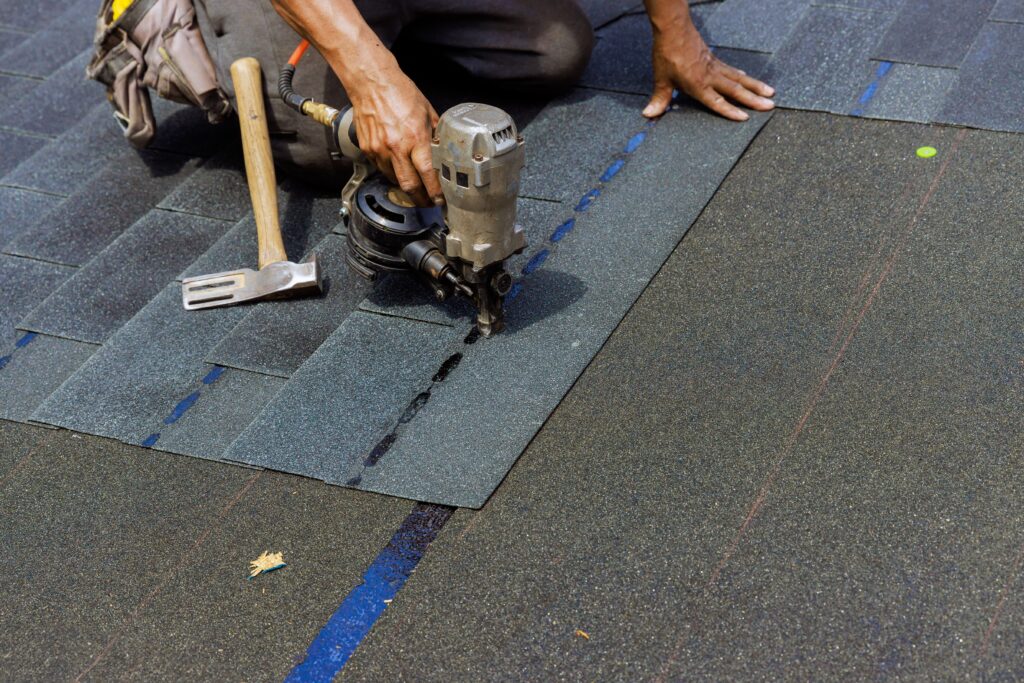
Next, the main roof installation begins. For an asphalt shingle roof, the roofing crew installs shingles across the roof according to the roofing system’s requirements. Areas such as valleys, edges, and the ridge cap require specific installation methods. This is usually one of the most visible stages of the project because the new roof quickly begins to take shape.
Step 6: Clean Up and Inspect the Work
A roof replacement isn’t finished when the last shingle goes on. The crew still needs to remove leftover materials, clean up debris, check the landscaping and surrounding property, and complete a final inspection. Your roofing contractor should also provide information about the roofing materials and applicable warranties.
Can You Stay Home During a Roof Replacement?
In most cases, yes. You can usually stay home while your roof is being replaced, just be prepared for noise.
A roof replacement involves workers walking across the roof, removing old materials, using tools, and installing new materials. If you work from home, have young children, or have pets that are sensitive to loud noises, you might prefer to spend part of the day somewhere else.
It’s also a good idea to keep vehicles away from the work area and follow any instructions your roofing contractor provides before the project begins.
Can Rain Delay a Roof Replacement?
Yes. Rain is one of the most common reasons a roofing schedule may change. Roofing crews need a safe, dry surface to work on. Opening large sections of a roof when rain is expected can also put your home at risk for water damage.
A responsible roofer may postpone work rather than risk exposing your home or putting the crew in unsafe conditions. If unexpected weather arrives after work begins, the crew can take steps to protect exposed areas until conditions improve.
Does Storm Damage Make Roof Replacement Take Longer?
It can. Storm damage isn’t always limited to missing or damaged shingles. Severe weather can also damage flashing, decking, gutters, and other parts of the roofing system.
A professional inspection can help determine whether you need a roof repair or a full replacement. If structural damage is found after the tear-off begins, repairs may need to be completed before the new roofing system can be installed. That can add time to the original schedule.
How Can You Prepare for Roof Replacement Day?
A little preparation can make installation day easier for you and the roofing crew. Before your project begins, consider:
- Moving cars away from the house
- Clearing patio furniture and other items near the home
- Protecting fragile items inside the attic
- Keeping children and pets away from the work area
- Removing fragile decorations from walls or shelves
- Making sure contractors can access the areas they need
- Talking with your roofer about protecting landscaping
- Asking where dumpsters, trailers, and roofing materials will be placed
Your contractor might provide additional instructions based on your home’s layout and roof design.
How Long Should a New Roof Last?
Installation may only take a few days, but a properly installed roof should protect your home for years. The exact lifespan of a roof depends on the materials, installation quality, weather exposure, ventilation, maintenance, and other factors.
That’s why choosing an experienced roofing contractor matters. Proper installation of the underlayment, flashing, shingles, ridge cap, drip edges, and ventilation system can all affect how well the roof performs over time.
Warranties are another factor to consider when choosing a new roofing system. Ask your contractor what manufacturer and workmanship warranties are available before the project begins.
Schedule Your Roof Replacement With Taylor Home Improvement
Taylor Home Improvement provides roof repair and roof replacement services for homeowners in Noblesville and throughout Central Indiana. Whether you’re dealing with storm damage, worn asphalt shingles, or a roof that’s reaching the end of its lifespan, the Taylor Home Improvement team can inspect your roof and recommend the right next step.
Taylor Home Improvement is also a GAF Master Elite Contractor and offers GAF extended warranty options.
Ready to get started? Request a free estimate from Taylor Home Improvement to learn more about your roof replacement options and expected timeline.
Frequently Asked Questions About Roof Replacement
How long does it take to replace a roof?
Most residential roof replacements take about one to three days. The exact timeline depends on roof size, roofing material, weather conditions, roof complexity, and whether damage is found during the tear-off.
Can a roof be replaced in one day?
Yes. Some smaller or less complex asphalt shingle roofs can be replaced in one day when weather conditions are good and no major problems are found underneath the old roofing materials.
What can make a roof replacement take longer?
Large roofs, steep pitches, complex rooflines, skylights, chimneys, bad weather, specialty roofing materials, and damaged roof decking can all add time to a roof replacement.
How long does it take to replace an asphalt shingle roof?
Many residential asphalt shingle roof replacements can be completed within one to three days. Roof size, crew size, weather, and the condition of the roof deck can affect the final timeline.
What happens if it rains during a roof replacement?
Roofing contractors monitor weather conditions and may delay work when rain is expected. If unexpected rain arrives during the project, exposed areas can be covered and protected until it is safe to continue.
Do I need to leave my house during a roof replacement?
Usually not. Most homeowners can stay home during a roof replacement, but the process can be loud. You may want to make other arrangements if you work from home or have children or pets that are sensitive to noise.